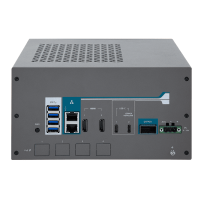
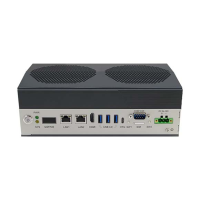
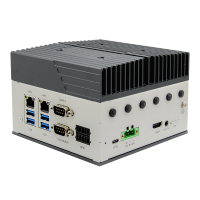
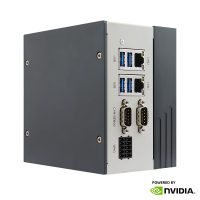
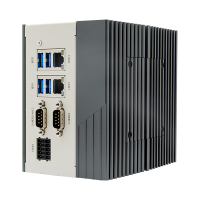
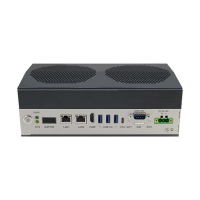
AEC-8000-Series
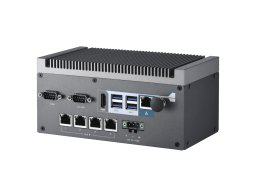
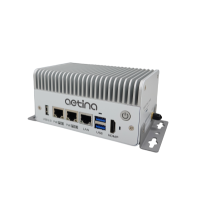
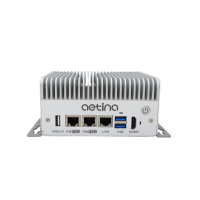
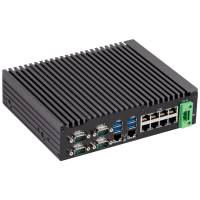
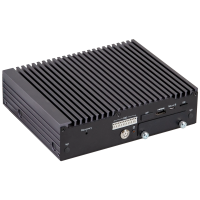
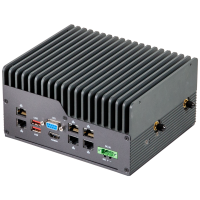
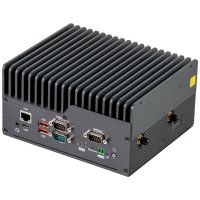
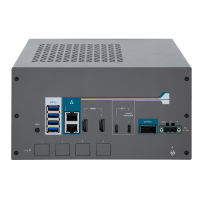
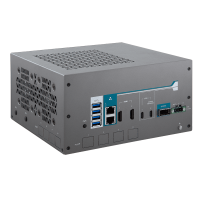
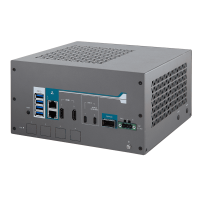
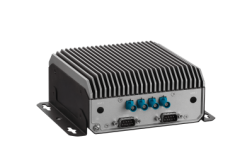
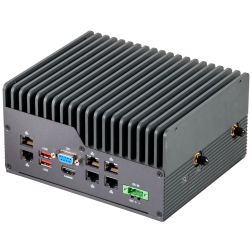
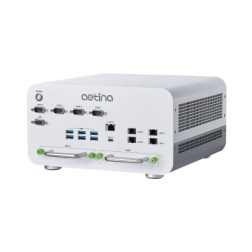
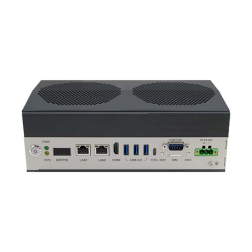
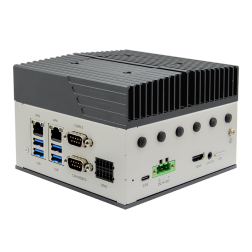
The AEC-8000 Series is an industrial embedded AI computer built on the NVIDIA® Jetson Thor™ T5000 system-on-module. Pairing a 14-core Arm® Neoverse™ V3AE CPU with a 2,650-core NVIDIA Blackwell™ GPU and fifth-generation Tensor Cores, the platform delivers up to 2,070 TFLOPS (FP4) — datacenter-grade AI inferencing performance in a compact, wall-mount chassis designed for continuous operation in harsh industrial environments.
Engineered for industrial automation, intelligent transport and machine-vision professionals, the AEC-8000 Series processes over 64 concurrent HD video streams while simultaneously managing camera networks, sensor buses, cellular uplinks and high-bandwidth LAN traffic. Five build-to-order (BTO) expansion options extend the base platform with GMSL automotive camera inputs, Power-over-Ethernet ports or additional USB 3.2 interfaces, allowing a single qualified hardware platform to address autonomous vehicles, roadside AI nodes, smart factories and edge data acquisition without hardware redesign.
Key Features
- 2,070 TFLOPS AI Performance (FP4): NVIDIA Blackwell GPU with 2,650 CUDA cores and 5th-generation Tensor Cores; 128 GB LPDDR5X unified memory shared between CPU and GPU supports large-model inferencing without memory-bandwidth bottlenecks
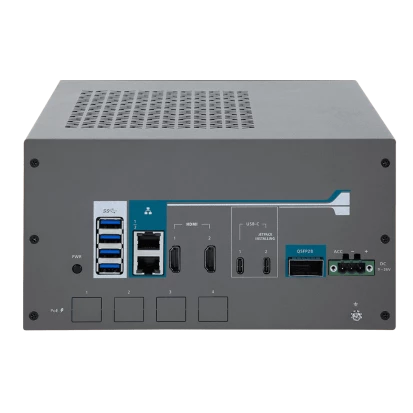
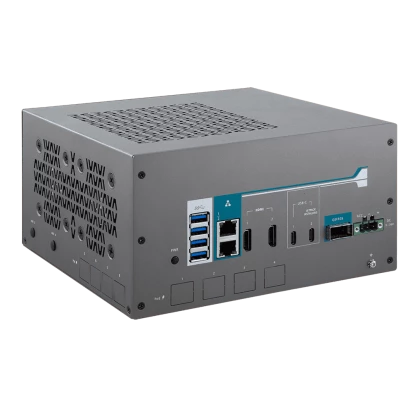
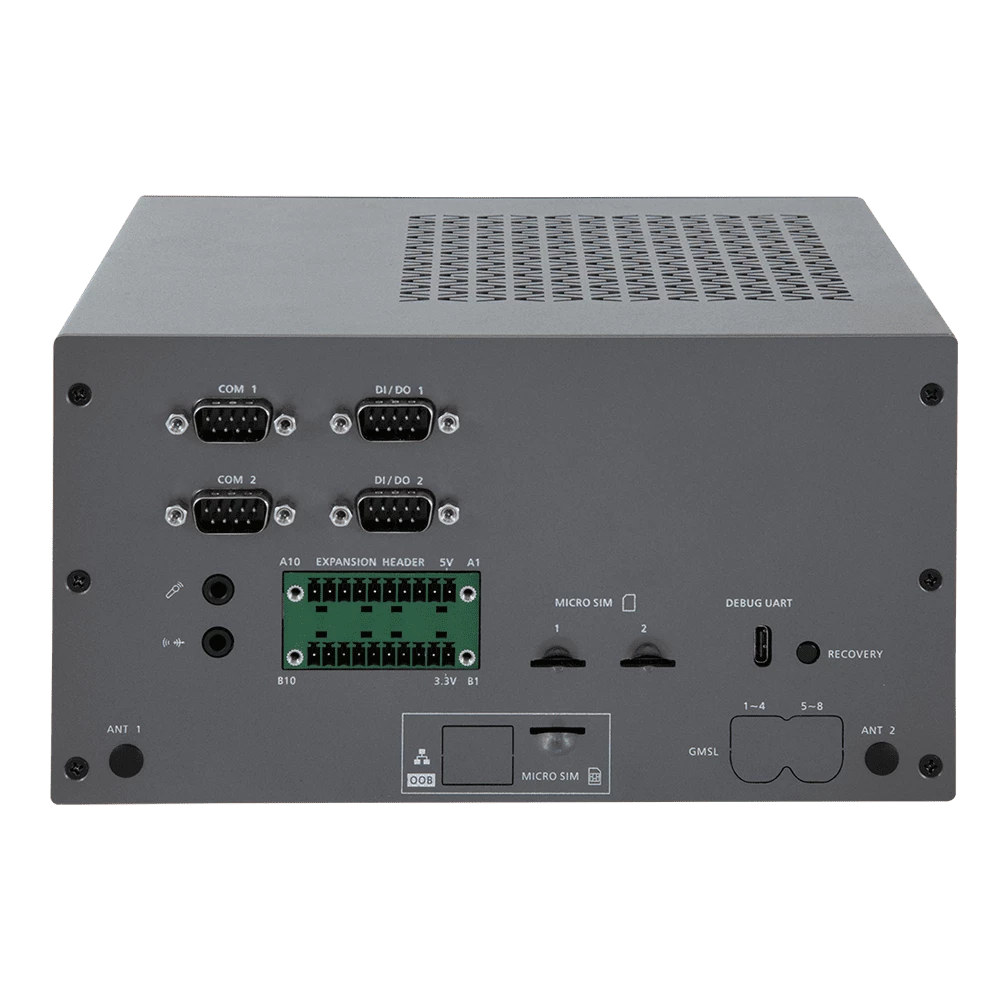
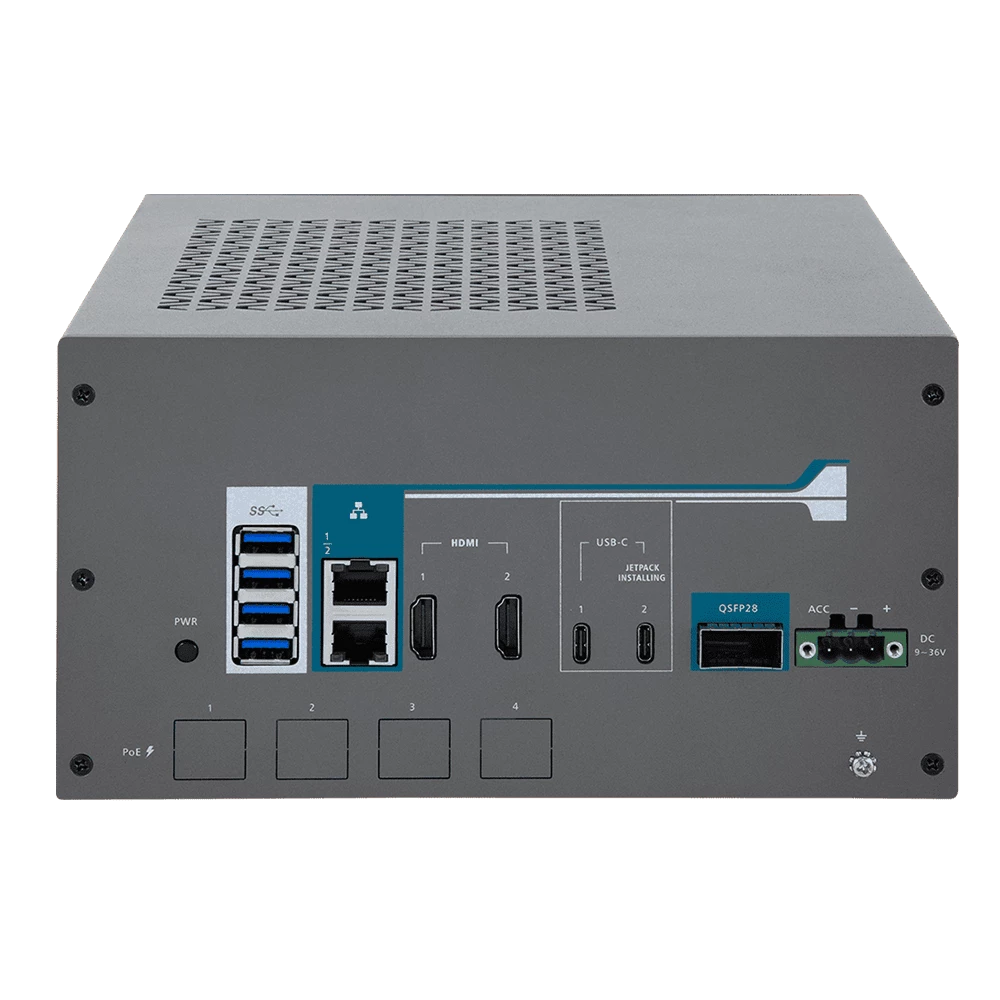
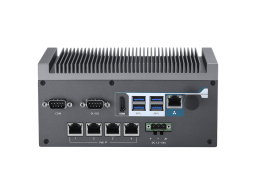
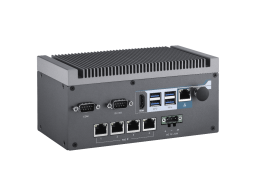
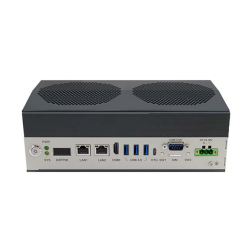
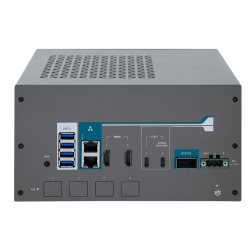
- Flexible High-Speed Networking: 2× GbE RJ-45 (one with NCSI out-of-band management), 1× QSFP supporting 4×25 GbE for high-throughput backbone links; M.2 E-Key slot for Wi-Fi 6E and M.2 B-Key for 4G LTE or 5G cellular modules
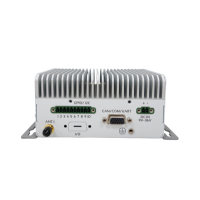
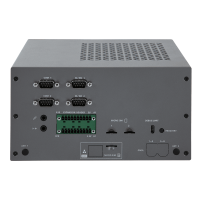
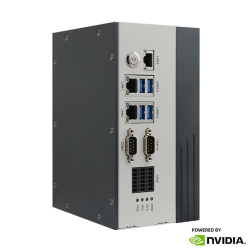
- Rich Industrial I/O: 2× RS-232/422/485 serial ports, 8 DI / 8 DO isolated GPIO, 1× CAN-FD galvanically isolated at 3 kV plus 3× CAN-FD with integrated transceiver — covering PLC integration, fieldbus communication and automotive networks in a single unit
- MIL-Grade Ruggedness: Operating range −25 °C to +50 °C; shock per MIL-STD-810H Method 516.8; vibration per MIL-STD-810G Method 514.6; humidity 5–95 % (non-condensing); EMC-certified to CE, FCC, EN 50155 and EN 50121-3-2
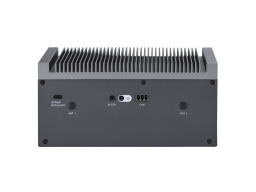
- Wide-Voltage Power with Vehicle Ignition Support: 9–36 V DC input with AT/ATX mode selection; ACC/IGN ignition control for in-vehicle deployment; redundant chassis fans and dedicated SOM fan for reliable thermal management
- Dual PCIe Gen5 NVMe Storage: Two M.2 M-Key 2280 slots (×2 and ×4 PCIe Gen5) for fast local inference model storage and high-speed data logging; hardware security via TPM 2.0 (SLB9672XU2.0)
- Purpose-Built BTO Expansion: Daughter boards add 8× GMSL automotive camera connectors, 8× GbE PoE ports or 8× USB 3.2 Type-A — combinable across five SKUs without motherboard redesign or re-qualification
Series Variants and Ordering Information
All AEC-8000 models share the same Jetson Thor T5000 compute platform, power architecture and core I/O set. BTO daughter boards extend the connectivity profile for specific application requirements.
| Model | Configuration | 8× USB 3.2 | 8× PoE | 8× GMSL |
|---|---|---|---|---|
| AEC-8000 | Base SKU — standard I/O | — | — | — |
| AEC-8100 | + 8× GMSL 1 camera inputs (Fakra-Z) | — | — | ✔ |
| AEC-8200 | + 8× GbE Power-over-Ethernet ports | — | ✔ | — |
| AEC-8300 | + 8× USB 3.2 Type-A expansion | ✔ | — | — |
| AEC-8400 | + 8× PoE + 8× GMSL 1 | — | ✔ | ✔ |
| AEC-8500 | + 8× USB 3.2 + 8× GMSL 1 | ✔ | — | ✔ |
AEC-8100 through AEC-8500 are built to order. Contact IPC2U for lead times and minimum order quantities.
Application Use Cases
Intelligent Traffic Systems and Roadside AI
The AEC-8000 Series processes 64 or more HD video streams simultaneously, making it well-suited for roadside intelligent traffic controllers, junction monitoring nodes and licence plate recognition arrays. The AEC-8100 and AEC-8400 variants connect directly to GMSL automotive cameras over shielded coaxial links, eliminating frame grabber cards and reducing cabinet complexity at the kerb. Combined with the 4×25 GbE QSFP uplink, processed metadata can be forwarded to traffic management centres at low latency without compressing raw video.
Autonomous and Assisted Driving Platforms
CAN-FD, isolated serial ports, wide-voltage DC input and ACC/IGN ignition logic allow the AEC-8000 Series to integrate cleanly into 12 V and 24 V vehicle electrical architectures. GMSL camera connectivity provides synchronised multi-camera perception for up to eight channels, whilst 2,070 TFLOPS of on-board AI compute supports real-time sensor fusion, object classification and path-planning workloads without cloud dependency — a critical requirement for applications with latency or connectivity constraints.
Industrial Automation and Machine Vision
For factory-floor deployment, the AEC-8300 and AEC-8500 variants provide eight additional USB 3.2 Type-A ports for high-bandwidth USB3 Vision and GigE Vision cameras, paired with isolated GPIO and RS-232/422/485 interfaces for PLC and fieldbus integration. The MIL-STD shock and vibration ratings ensure continued operation on production lines subject to mechanical stress, and the wide input-voltage range tolerates the transients common in industrial power supplies.
Smart City and PoE Surveillance Infrastructure
Urban deployments requiring Power-over-Ethernet camera networks benefit from the AEC-8200 and AEC-8400 variants, which deliver both power and data to up to eight IP cameras over standard RJ-45, reducing cabling overhead at street-level enclosures. The −25 °C lower operating limit covers outdoor installations across temperate and continental climates, and EN 50155 certification satisfies EMC requirements for fixed trackside and rail-adjacent installations.
Edge AI Inference for Industrial IoT
Engineers building predictive maintenance, quality inspection or anomaly detection pipelines can run large vision transformer or diffusion models locally on the 128 GB unified memory pool, use the PCIe Gen5 NVMe slots for rapid model loading, and relay telemetry over 5G cellular — all without transmitting raw sensor data off-site. TPM 2.0 hardware security protects inference models and device credentials in distributed deployments.
Why Choose the AEC-8000 Series
Datacenter-Class AI in a Field-Deployable Form Factor
The NVIDIA Jetson Thor T5000 represents a generational advance in embedded AI compute. At 2,070 TFLOPS (FP4), the AEC-8000 Series delivers performance previously available only in rackmount GPU servers — packaged in a 4 kg, wall-mount unit drawing as little as 9 V DC. This allows the platform to run state-of-the-art vision transformers, LiDAR fusion pipelines and multi-stream video analytics as a standalone edge node rather than a cloud-dependent client, reducing operating costs and eliminating latency introduced by round-trip data transmission.
Purpose-Built Industrial I/O for Demanding Real-World Conditions
Unlike general-purpose AI boxes adapted from desktop or server hardware, the AEC-8000 Series was designed from the outset for transport and industrial environments. Galvanically isolated CAN-FD, RS-422/485 serial, 8 DI/8 DO GPIO, MIL-STD-810H/G shock and vibration qualification, and EN 50155 railway EMC certification address the interface and reliability requirements that systems integrators encounter in real-world deployments — not controlled laboratory conditions. The result is a platform that engineers can specify with confidence into safety-critical and infrastructure programmes.
A Single Qualified Platform Across Multiple Markets
The BTO expansion architecture allows engineering teams to qualify a single compute module and differentiate at the daughter-board level, reducing design effort, spares inventory and supply-chain complexity across projects. Whether the application requires GMSL cameras on a roadside gantry, PoE IP cameras in a production hall, or high-density USB vision sensors on an assembly robot, the AEC-8000 Series scales to the requirement without a new hardware revision or re-qualification cycle.
Frequently Asked Questions
What processor does the AEC-8000 Series use?
The AEC-8000 Series is powered by the NVIDIA Jetson Thor T5000 system-on-module, which integrates a 14-core Arm Neoverse V3AE 64-bit CPU, a 2,650-core NVIDIA Blackwell GPU with fifth-generation Tensor Cores, and 128 GB of LPDDR5X unified memory.
What is the AI performance of the AEC-8000 Series?
The AEC-8000 Series delivers up to 2,070 TFLOPS (FP4) and supports concurrent analysis of over 64 HD video streams under NVIDIA JetPack 7.0.
What are the differences between AEC-8000 Series models?
The series includes one base SKU (AEC-8000) and five build-to-order variants: AEC-8100 adds 8× GMSL camera inputs; AEC-8200 adds 8× GbE PoE ports; AEC-8300 adds 8× USB 3.2 Type-A; AEC-8400 combines PoE with GMSL; and AEC-8500 combines USB 3.2 with GMSL.
Is the AEC-8000 Series suitable for in-vehicle deployment?
Yes. The unit accepts 9–36 V DC with AT/ATX mode selection and ACC/IGN ignition control, making it compatible with both 12 V and 24 V vehicle electrical systems. MIL-STD-810H shock and MIL-STD-810G vibration qualification support mobile and rail applications.
What operating systems are supported?
The AEC-8000 Series runs Ubuntu with NVIDIA JetPack 7.0, providing access to the full NVIDIA AI software stack including TensorRT, CUDA, cuDNN and DeepStream for video analytics pipelines.

Get a Quote