nHMI-10M
TFT Industrial Panel PC with Cortex-A8 AM3352 CPU, 512 MB SDRAM, 4 GB eMMC, 2× USB, 3× COM, Dual LAN
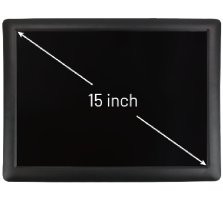
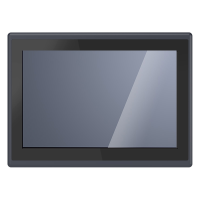
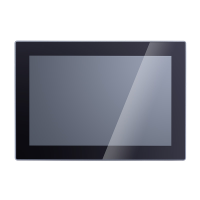
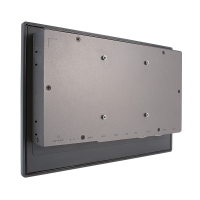
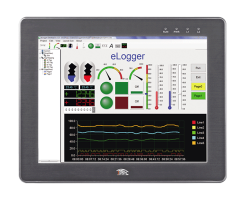
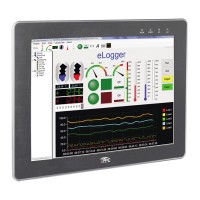
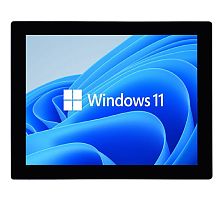
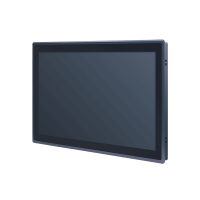
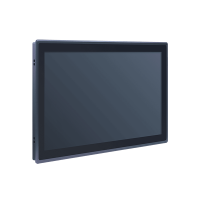
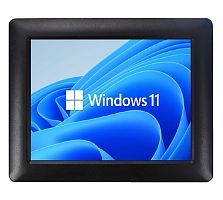
In its compact form factor with a universal selection of interfaces, the nHMI-10M positions itself as a versatile and flexible TFT human–machine interface (HMI), suitable for SCADA and H2M applications or as an IoT terminal, to clearly monitor and control automated environments via the 10.2″ touchscreen.
The nHMI-10M uses a 1 GHz Cortex-A8 Sitara AM3352 CPU, based on an energy-efficient yet high-performance ARM architecture for embedded devices. Memory includes 512 MB RAM and 4 GB eMMC flash for the OS and user data. Capacity expansion—for extensive logging, for example—is possible via an SD card slot. Optimized hardware design ensures smooth graphics output, fast data capture, and low power consumption, making the nHMI-10M a high-performance, responsive HMI and IoT terminal that integrates seamlessly into diverse IT infrastructures.
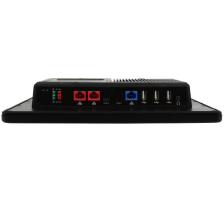
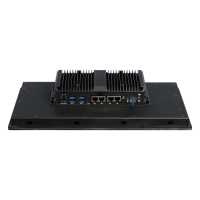
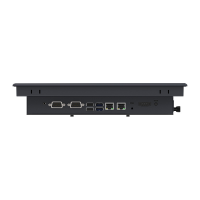
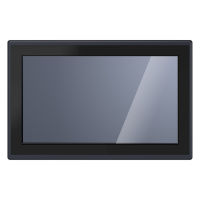
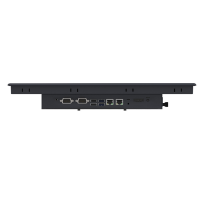
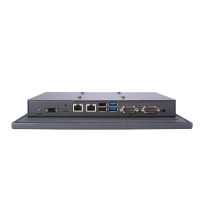
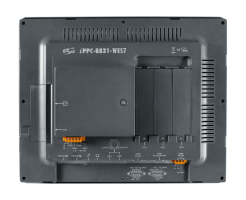
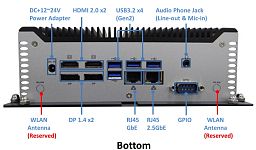
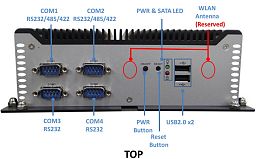
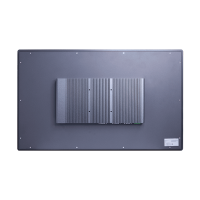
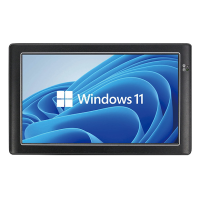
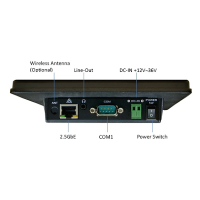
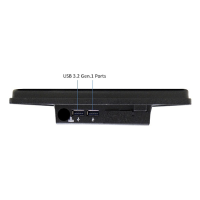
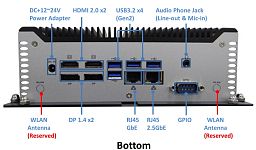
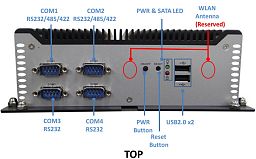
Despite its compact build, the nHMI-10M offers extensive I/O, including USB Type A and Type B ports, dual serial COM (RS232/422/485), and an additional RS422/485 or optional CAN Bus interface. Standard network connectivity is via 10/100 Mbps Ethernet; optional dual LAN is available for mission-critical environments requiring redundant or branched network topologies. The display is a resistive 10.1″ TFT touchscreen with 800 × 480 px resolution and 350 cd/m² brightness.
For rapid, easy development of custom projects, the nHMI-10M provides its own nHMI Developer SDK with a graphical interface, enabling straightforward creation even for complex tasks, including multilingual interfaces. High reliability is ensured by an MTBF of 20,000 hours for the display and electrical isolation of sensitive interfaces against voltage spikes. With a tolerant input voltage range of 19.2 V to 28.8 V DC, the nHMI-10M handles unstable power supplies. It offers an excellent solution for integrating local IoT and HMI terminals across environments—from machinery and plant engineering to building automation and industrial process management.
Get a Quote