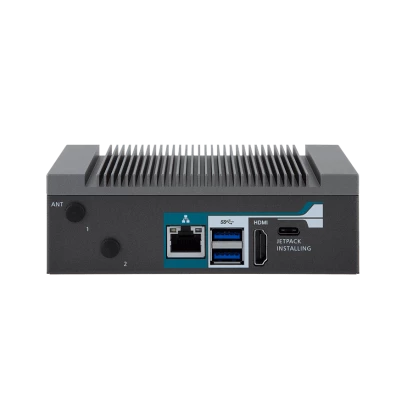
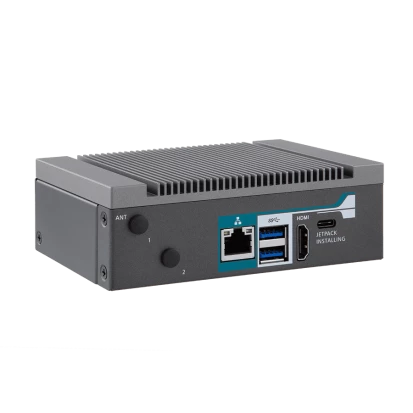
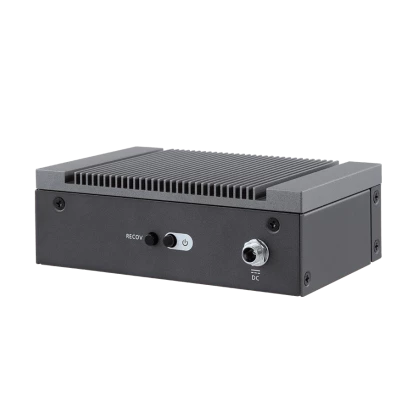
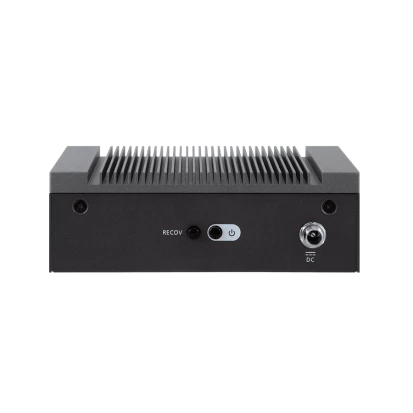
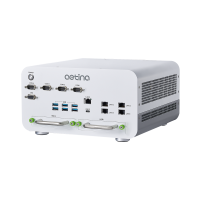
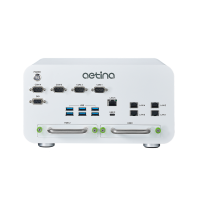
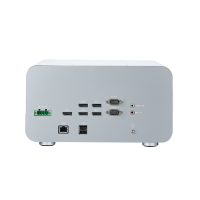
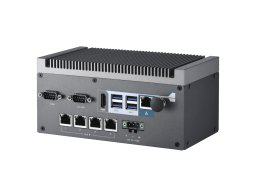
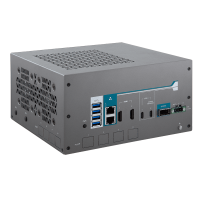
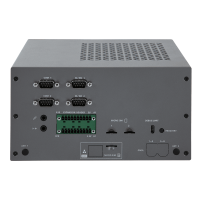
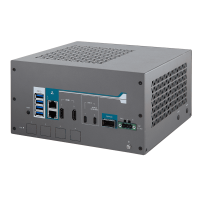
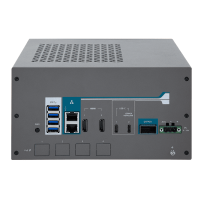
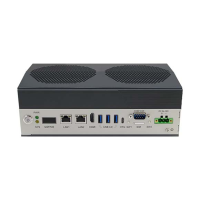
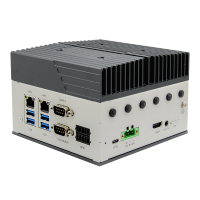
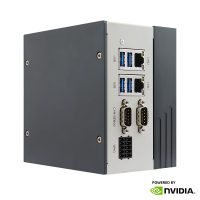
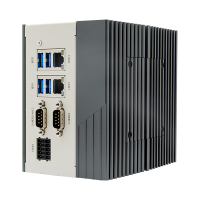
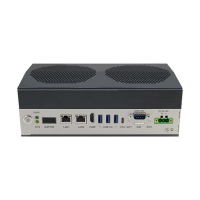
AEC-2000-8GB
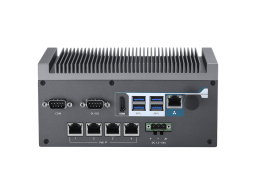
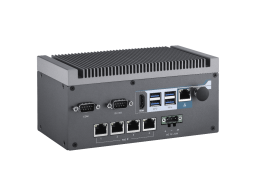
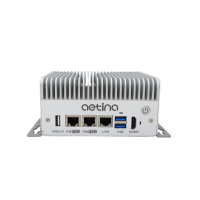
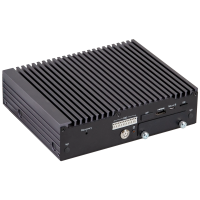
The AEC-2000-8GB is a compact fanless edge AI Box PC built on the NVIDIA® Jetson Orin™ Nano module with Super Mode support, combining an 8-core Arm® Cortex®-A78AE CPU with a 1,024-core NVIDIA Ampere™ GPU featuring 32 Tensor Cores and 8 GB of LPDDR5 unified memory. Measuring just 130 × 82 × 49 mm and designed for continuous fanless operation from −25 °C to +50 °C, the AEC-2000-8GB brings genuine neural network inference capability to deployments where size, power budget and operating environment make larger AI computers impractical.
Powered by a DC 9–24 V wide-range input and qualified to MIL-STD-810G vibration standards, the AEC-2000-8GB is engineered for installation in mobile platforms, compact field enclosures and space-constrained control cabinets where a fanless, wall-mountable AI computer must survive mechanical stress without scheduled maintenance. Dual M.2 slots — one for NVMe SSD storage and one for a Wi-Fi module — provide the flexibility to configure local data storage and wireless connectivity independently, whilst the HDMI 2.0 output supports 4K displays for on-site visualisation and operator interfaces.
Key Features
- NVIDIA Jetson Orin Nano with Super Mode — 1,024-Core Ampere GPU: 8-core Arm Cortex-A78AE v8.2 CPU alongside a 1,024-core Ampere GPU with 32 Tensor Cores and 8 GB LPDDR5 unified memory; Jetson Orin Nano Super Mode unlocks additional compute headroom for demanding real-time inference workloads beyond the standard operating envelope
- Fanless Operation from −25 °C to +50 °C: Fully passive thermal design eliminates moving parts, fan maintenance and particulate ingress; MIL-STD-810G vibration qualification (Method 514.6, Procedure I, Category 4) ensures reliable operation in transport, mobile robotics and vibrating machinery installations; storage range −40 °C to +85 °C
- Exceptionally Compact Form Factor: 130 × 82 × 49 mm chassis — smaller than a standard paperback book — with wall-mount capability; 4K HDMI 2.0 output (3,840×2,160@30Hz) and USB 3.2 connectivity in a package suited for mounting inside machine housings, behind displays and in vehicle compartments where space is the primary constraint
- Wide-Range DC 9–24 V Power Input: Operates directly from 12 V and 24 V industrial and vehicle DC supplies without external voltage conversion; covers standard embedded computing power rails found in automotive, AGV, drone and industrial control applications
- Dual M.2 Expansion — Storage and Wireless: One M.2 M-Key 2280 socket for NVMe SSD (128 GB pre-installed) provides fast local model and data storage; one M.2 E-Key 2230 socket for a Wi-Fi module enables wireless connectivity for cloud telemetry and OTA model updates without additional hardware
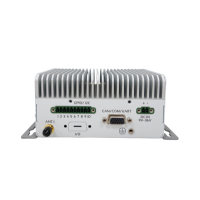
- Industrial Header I/O: 2×10-pin header exposes 2× I2C, 1× UART and 9-bit digital I/O — covering sensor integration, serial device communication and discrete input/output control for embedded automation without requiring a separate I/O expansion module
AEC-2000 Series Variants
The AEC-2000 Series is available in two configurations sharing the same chassis, I/O set and operating specifications. Both variants support Jetson Orin Nano Super Mode.
| Model | Memory | GPU Cores | Tensor Cores |
|---|---|---|---|
| AEC-2000-4GB | 4 GB LPDDR5 | 512-core NVIDIA Ampere | 16 |
| AEC-2000-8GB | 8 GB LPDDR5 | 1,024-core NVIDIA Ampere | 32 |
Both models include a 128 GB NVMe SSD, 1× GbE, 2× USB 3.2, 1× HDMI 2.0 and wall-mount hardware. The 8 GB variant is recommended for multi-model inference and concurrent vision pipeline workloads.
Application Use Cases
Smart Retail and Point-of-Sale AI
The AEC-2000-8GB fits directly behind a VESA-compatible display or inside a kiosk cabinet, running customer analytics, product recognition and queue management models from the Jetson Orin Nano's Ampere GPU without a separate inference server. The compact form factor and HDMI 2.0 output make it the inference engine and display controller in a single unit, whilst the wide-range DC input operates from standard 12 V retail power infrastructure.
Machine Vision for Entry-Level Inspection and Monitoring
Two USB 3.2 Type-A ports connect USB3 Vision or industrial USB cameras for automated visual inspection, barcode reading or defect detection at production lines and logistics checkpoints. Running NVIDIA JetPack 6.2 with DeepStream and TensorRT, the AEC-2000-8GB executes classification and detection pipelines locally without transmitting image data over the network, preserving bandwidth and reducing inference latency to within production cycle-time budgets.
Mobile Robotics and AGV Edge Compute
The MIL-STD-810G vibration qualification, 9–24 V DC input and fanless thermal design address the three primary constraints of autonomous guided vehicle (AGV) compute node selection. The 130 × 82 × 49 mm chassis fits within standard robot computer bays, the 9–24 V range accommodates both 12 V and 24 V AGV battery architectures, and the I2C and UART headers on the 2×10-pin connector interface directly with motor controllers and IMU sensors without a USB-to-serial bridge.
Smart City and IoT Edge Gateway
Deployed in roadside enclosures, lamp post controllers and utility junction boxes, the AEC-2000-8GB processes sensor and camera data locally before forwarding summarised telemetry over Wi-Fi or GbE — reducing cellular bandwidth costs in large-scale smart city deployments. The −25 °C to +50 °C operating range covers outdoor installations across Northern and Central European climates, and CE/FCC certification satisfies regulatory requirements for publicly installed infrastructure equipment.
Drone and Unmanned Platform AI Payload
For unmanned aerial and ground platforms, the combination of compact dimensions, wide-voltage operation, MIL-STD-810G vibration resistance and JetPack 6.2 GPU compute makes the AEC-2000-8GB a viable AI payload for real-time object detection, terrain mapping and obstacle avoidance. The 9-bit DIO header provides direct GPIO connectivity to flight controllers and servo systems, whilst the M.2 E-Key Wi-Fi slot enables ground station communication within radio range without additional SBC hardware.
Why Choose the AEC-2000-8GB
Jetson Orin Nano AI Performance in the Smallest Available Chassis
At 130 × 82 × 49 mm, the AEC-2000-8GB is among the most compact Jetson Orin Nano Box PCs available. This matters in deployments where the AI computer must fit inside an existing machine housing, vehicle compartment or field enclosure that was designed without a standalone AI node in mind. Unlike development kits or evaluation modules that require custom integration work, the AEC-2000-8GB ships as a complete, wall-mountable industrial product with power input, display output, USB and M.2 expansion — ready for system integration without additional engineering effort.
Fanless and Vibration-Qualified for the Environments That Matter
The MIL-STD-810G vibration qualification combined with a fully passive thermal design means the AEC-2000-8GB can be deployed in environments that fan-cooled computers cannot enter: vibrating production machinery, transport vehicles, outdoor kiosks and dusty factory floors. There are no filters to clean, no fan bearings to replace and no airflow pathways to block. The result is a lower total cost of ownership over extended deployment lifetimes compared with active-cooled alternatives of equivalent AI performance.
A Complete Edge AI Node at Minimal Size and Cost
The 128 GB NVMe SSD, pre-installed module, dual M.2 expansion sockets and industrial I/O header mean the AEC-2000-8GB arrives as a deployable system rather than a bare compute board. Engineers configure NVMe storage capacity, Wi-Fi connectivity and model deployment in a single integration step, reducing project lead times. For programmes deploying AI inference at scale — smart retail chains, city-wide sensor networks, vehicle fleets — the compact form factor and low system BOM of the AEC-2000-8GB translate directly into reduced per-node installation and logistics costs.
Frequently Asked Questions
What processor and GPU does the AEC-2000-8GB use?
The AEC-2000-8GB is powered by the NVIDIA Jetson Orin Nano module with Super Mode support, integrating an 8-core Arm Cortex-A78AE v8.2 64-bit CPU, a 1,024-core NVIDIA Ampere architecture GPU with 32 Tensor Cores, and 8 GB of LPDDR5 unified memory.
What is the operating temperature range of the AEC-2000-8GB?
The AEC-2000-8GB operates from −25 °C to +50 °C with 0.63 m/s airflow in a fully fanless design. Storage temperature range is −40 °C to +85 °C. The unit meets MIL-STD-810G vibration requirements (Method 514.6, Procedure I, Category 4).
What is the difference between the AEC-2000-4GB and AEC-2000-8GB?
The AEC-2000-8GB includes 8 GB LPDDR5 memory and a 1,024-core Ampere GPU with 32 Tensor Cores. The AEC-2000-4GB includes 4 GB LPDDR5 and a 512-core GPU with 16 Tensor Cores. Both models share the same chassis, I/O and operating specifications. The 8 GB variant is recommended for workloads running multiple inference models concurrently or processing higher-resolution input streams.
What storage and wireless expansion does the AEC-2000-8GB support?
The AEC-2000-8GB includes a 128 GB NVMe SSD in the M.2 M-Key 2280 slot, with a second M.2 M-Key 2280 socket available for additional NVMe SSD capacity. A separate M.2 E-Key 2230 socket accepts a Wi-Fi module for wireless connectivity. No further expansion slots are provided.
What power supply does the AEC-2000-8GB require?
The AEC-2000-8GB accepts DC 9–24 V input, covering standard 12 V and 24 V industrial, vehicle and embedded computing power rails without external voltage conversion. No external power brick is specified; the unit connects directly to DC system power via the terminal connector.
Get a Quote