


Panel-PCs Fanless
Filter
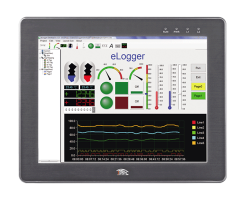
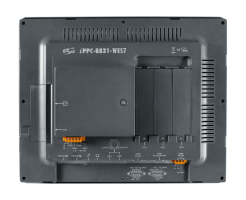
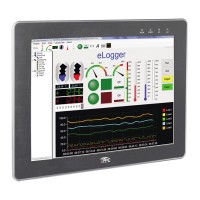
The Advantages of Passive Cooling at a Glance
In modern production environments, downtime is the biggest cost factor. Fanless panel PCs eliminate the typical wear risks associated with active cooling systems from the very beginning:
-
Protection Against Dust and Dirt: Thanks to the closed-chassis design, airborne particles, metal dust, and oil mist cannot enter the system and cause short circuits.
-
Resistance to Vibration and Shock: Without rotating components and combined with industrial SSD storage (M.2 / mSATA), these systems are highly resistant to shocks and vibrations on machinery or inside vehicles.
-
Maintenance-Free 24/7 Operation: Since no fan blades can become blocked or contaminated, service requirements are reduced to a minimum, lowering maintenance costs.
-
Silent Operation: Ideal for noise-sensitive environments such as laboratories, medical technology, or control rooms.
Customized Fanless Systems for Every Industry
-
Food & Pharmaceutical Industries: Combined with stainless steel enclosures (IP65/IP69K), fanless PCs withstand high-pressure cleaning and disinfectants. Without ventilation slots, bacteria and germs have no place to accumulate.
-
Logistics: Compact vehicle-mounted computers withstand constant vibration on forklifts and support wide operating temperature ranges (often from -20 °C to +60 °C) in outdoor or cold-storage environments.
-
Control Cabinet Integration: As flat panel-mount systems, they integrate seamlessly into control cabinets while efficiently dissipating heat through the rear housing.
Frequently Asked Questions About Fanless Panel PCs (FAQ)
How does cooling work without a fan?
Heat generated by internal components is transferred directly to the housing — typically made of aluminum or stainless steel — via heatpipes. The rear side of the enclosure acts as a large heatsink, passively dissipating heat into the surrounding air.
Are fanless panel PCs less powerful?
No. Thanks to highly efficient processor architectures (such as Intel® Core™ i3/i5/i7 embedded-class CPUs), modern fanless PCs deliver impressive computing power with minimal thermal design power (TDP) — making them suitable even for demanding edge AI applications.
Can fanless systems overheat?
The systems are precisely specified for extended temperature ranges. If the maximum operating temperature is exceeded, the CPU automatically protects itself through mechanisms such as thermal throttling to prevent hardware damage.