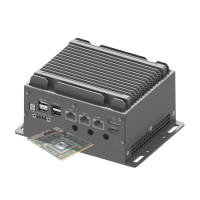
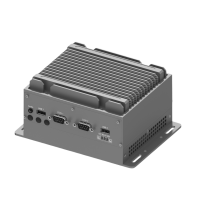
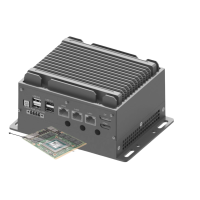
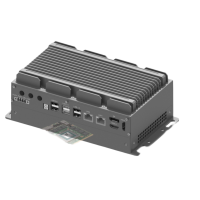
RVP-T1M
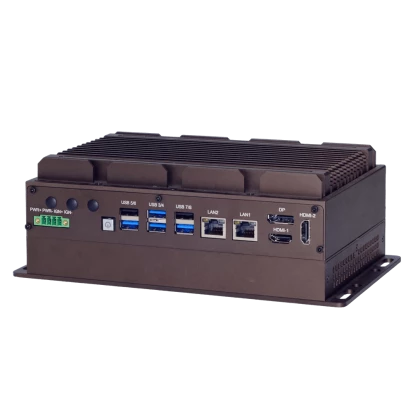
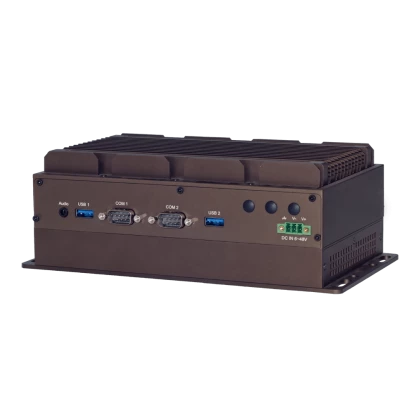
The Enbik RVP-T1M is a mini-slim edge AI computer that combines an Intel 12th, 13th or 14th Gen Core processor (15 W) with a modular NVIDIA MXM GPU delivering up to 321 TOPS in a 203 × 125 × 70 mm, 1.75 kg chassis rated for −20 °C to +50 °C. GPU options include RTX 4070, RTX 4060 and RTX 4050 (Ada Lovelace, 65 W TGP) and RTX 2000/A2000 (Ampere, 35 W TGP), with up to 96 GB DDR5 memory.
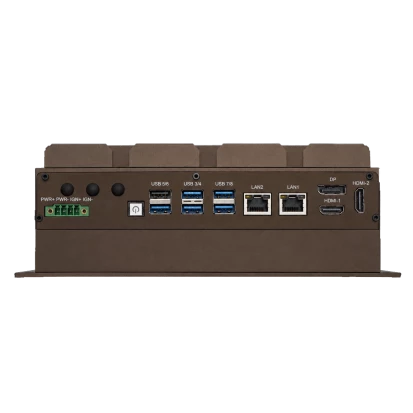
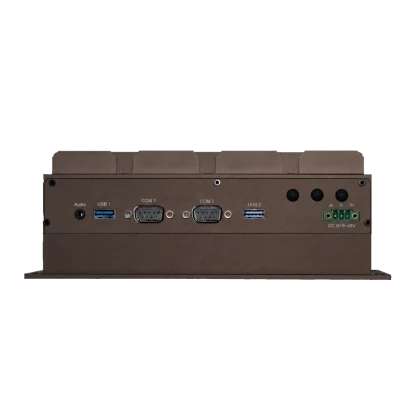
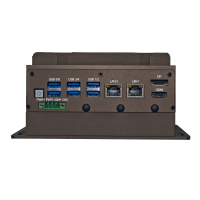
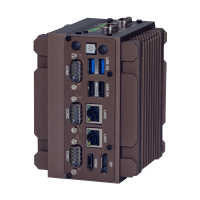
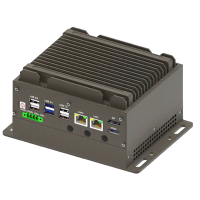
A wide 6–48 V DC input with ignition power control connects directly to 12 V/24 V vehicle systems and 24 V/48 V industrial supplies. Three display outputs (2× HDMI + DisplayPort up to 4096 × 2304), dual LAN (2.5 GbE + GbE), 8× USB and two COM ports serve machine vision, AMR/AGV control and in-vehicle AI without additional interface hardware.
Key Features
- NVIDIA MXM GPU up to 321 TOPS: RTX 4070/4060/4050 at 65 W TGP deliver up to 321 TOPS; RTX 2000/A2000 at 35 W TGP reach 194 TOPS for thermally constrained deployments. The GPU module is selected at order time.
- Intel 12th–14th Gen Core at 15 W TDP: From Core i3 to Core Ultra 7 155U; DDR5 memory scales to 64 GB (12th/13th Gen) or 96 GB (14th Gen Core Ultra).
- Triple display output: 2× HDMI (4096 × 2160 @ 30 Hz) + DisplayPort (4096 × 2304 @ 60 Hz) drive camera feed, inference visualisation and operator HMI simultaneously.
- 6–48 V DC with ignition control: Covers 12/24/48 V vehicle and industrial power without a DC/DC adapter; graceful shutdown on ignition-off protects OS integrity.
- 2× M.2 2242 SATA III with RAID 0/1: RAID 1 mirroring protects AI logs in unattended deployments; RAID 0 boosts write throughput for video capture.
- Rich connectivity: 1× 2.5 GbE + 1× GbE, 8× USB (6× USB 3.2 Gen 1), 1× RS-232/422/485 + 1× RS-232, plus M.2 B-key (5G + SIM), mini-PCIe (SIM) and M.2 E-key (Wi-Fi/BT/GPS).
- Certified and warrantied: CE (EN 55032/55035), FCC Class A, 3-year manufacturer warranty.
GPU Configuration Options
| GPU Module | Architecture | TGP | AI Performance |
|---|---|---|---|
| RTX 4070 / 4060 / 4050 | Ada Lovelace | 65 W | Up to 321 TOPS |
| RTX 2000 / A2000 | Ampere | 35 W | Up to 194 TOPS |
Application Use Cases
Machine Vision and Quality Inspection
The RVP-T1M receives camera streams via USB 3.2 and GbE, runs defect-detection inference on the MXM GPU at conveyor speed, and signals a PLC through the RS-232/422/485 port — with the triple display showing live feed, defect heatmaps and production statistics from one unit.
AMR/AGV AI Controller
The GPU processes LiDAR point clouds and camera AI at up to 321 TOPS whilst the CPU handles fieldbus communication to motor controllers. Ignition control synchronises startup with the robot's power bus; the −20 °C rating covers cold-storage fleets.
In-Vehicle Edge AI and Telematics
Direct 12/24 V battery connection, timed graceful shutdown on engine-off, 4G/5G + GPS expansion for fleet tracking, and GPU-driven ADAS camera analytics make the RVP-T1M a complete vehicle AI platform.
Multi-Camera AI Vision Gateway
Six USB 3.2 ports and dual Ethernet aggregate multiple camera streams; 96 GB DDR5 headroom keeps multi-stream inference latency stable, with results forwarded over 2.5 GbE to SCADA or MES.
Why Choose the RVP-T1M
Workstation-grade GPU in a cabinet-mount chassis. The RTX 4070-class MXM module delivers 321 TOPS — roughly 4–10× the throughput of typical embedded AI modules — in a chassis small enough for a control cabinet door or mobile platform. That difference translates directly into how many camera streams run at the required frame rate.
One SKU for panel and vehicle deployments. The 6–48 V input with ignition management covers fixed 24/48 V panel installations and 12/24 V vehicle fleets from the same hardware, simplifying spares inventory for mixed deployments.
Modular GPU protects the investment. The MXM interface lets the GPU tier match the inference budget at order time and be upgraded later without replacing CPU, memory, storage or chassis — relevant for AMR fleets whose AI models grow across software releases.
Frequently Asked Questions
What GPU options are available for the RVP-T1M?
NVIDIA RTX 4070, RTX 4060 and RTX 4050 (Ada Lovelace, 65 W TGP, up to 321 TOPS) and RTX 2000/A2000 (Ampere, 35 W TGP, up to 194 TOPS). The MXM module is specified at order time.
What processors and memory does the RVP-T1M support?
Intel 12th Gen (i3-1215U to i7-1265U), 13th Gen (i3-1315UE to i7-1365URE) and 14th Gen (Core Ultra 7 125U/155U), all 15 W TDP. Maximum DDR5 is 64 GB with 12th/13th Gen and 96 GB with 14th Gen Core Ultra.
How does the ignition power control work?
The unit powers on when the ignition signal is asserted and starts a configurable graceful shutdown delay when it is removed, preventing file-system corruption from hard power loss. A remote power switch header serves non-vehicle installations.
Does the RVP-T1M support RAID?
Yes — two M.2 2242 SATA III slots support RAID 0 (striping) and RAID 1 (mirroring), configured at OS level. Industrial-grade SSDs are recommended for extended-temperature deployments.
What wireless options are available?
M.2 Key-B with SIM for 4G/5G, mini-PCIe with SIM for a second cellular or LPWAN module, and M.2 Key-E for Wi-Fi 6/6E, Bluetooth and GPS. All three slots can be populated simultaneously.
Get a Quote