Introduction
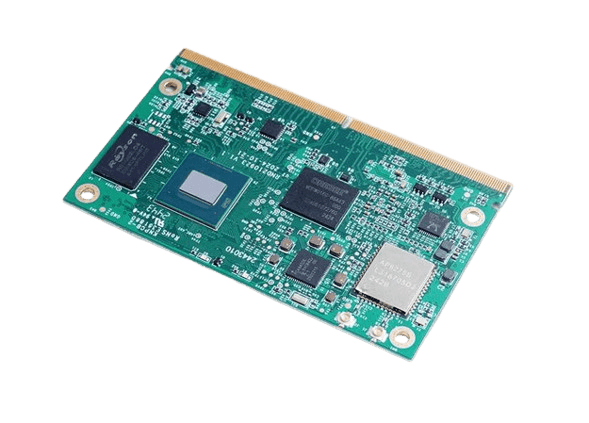
The new NX8MP-SMARC module from ICOP Technology is built for applications where intelligence, connectivity, and reliability must coexist in a compact, low-power form factor — from smart factories and autonomous robots to AI-enabled traffic systems and medical devices. Based on the NXP i.MX 8M Plus quad-core SoC and conforming to the SMARC 2.1 standard, the module delivers a production-ready foundation for next-generation edge AI systems — without forcing engineers to reinvent the wheel on hardware design.
This article explores the architecture and key features of the NX8MP-SMARC, explains why the SMARC 2.1 standard is a strategic choice for embedded product developers, and examines a range of real-world application scenarios where this module excels.
What Is SMARC and Why Does It Matter?
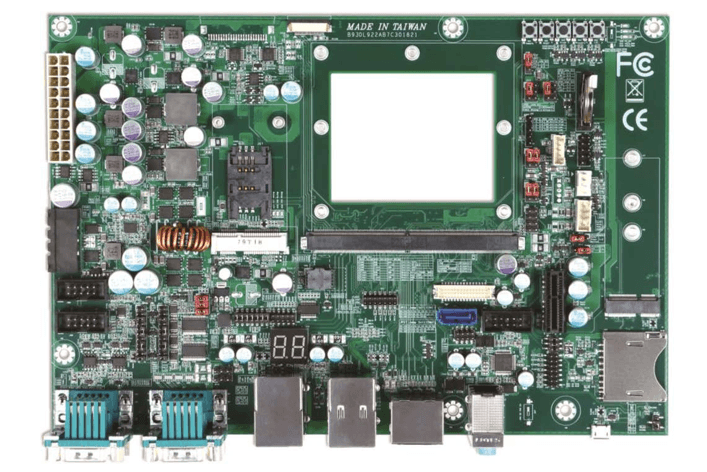
SMARC (Smart Mobility ARChitecture) is a small-form-factor Computer-on-Module standard defined by the SGET (Standardization Group for Embedded Technologies) consortium. It was designed to address the growing demand for low-power, cost-effective, and highly integrated embedded computing modules across industrial, transportation, medical, and IoT applications.
The SMARC standard defines a credit-card-sized module measuring 82 × 50 mm that hosts the core compute circuitry — processor, RAM, power sequencing, and boot flash — while leaving application-specific I/O, connectors, and peripherals to a companion carrier board. This modular split delivers several key engineering advantages:
- Reduced carrier board complexity: the carrier board contains only application-specific circuitry, making its design simpler and cheaper.
- CPU upgradeability: when a faster processor becomes available, developers can swap the SMARC module without redesigning the carrier board.
- Vendor independence: the 314-pin MXM 3 edge connector is shared across vendors, enabling multi-source procurement.
- Exceptional interface density: at typically 6 W, SMARC supports up to 4 camera inputs, 4 graphics outputs, GbE ports, and CAN bus — an interface-per-watt ratio that competing CoM standards struggle to match.
- Fast time to market: a mature ecosystem of carrier boards, BSPs, and software stacks lets developers move from concept to prototype in weeks.
The SMARC 2.1 revision further refined the connector pinout and introduced support for modern high-speed interfaces, making it the current go-to standard for new embedded product designs.
NX8MP-SMARC: Architecture Overview
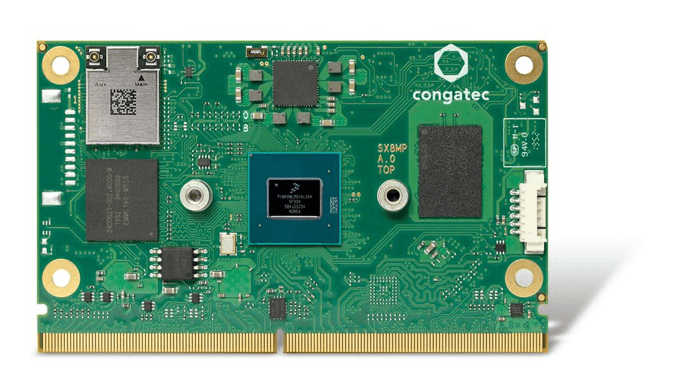
At the heart of the NX8MP-SMARC is the NXP i.MX 8M Plus application processor — NXP's flagship SoC for edge AI and industrial multimedia. The SoC integrates several specialized processing engines on a single die, enabling complex workloads without additional co-processors.
Processor and Compute Cores
The NX8MP-SMARC is built on a quad-core ARM Cortex-A53 running at up to 1.6 GHz, with a 1.8 GHz option in the 0–70°C variant. This energy-efficient 64-bit ARMv8 architecture delivers robust multi-threaded performance while keeping power consumption low — a critical advantage for fanless embedded systems.
The i.MX 8M Plus also integrates a Cortex-M7 real-time core at up to 800 MHz. This dedicated processor handles latency-sensitive tasks such as motor control, sensor polling, and safety watchdog functions independently of the Linux application stack, enabling true heterogeneous computing on a single chip.
Dedicated Neural Processing Unit (NPU)
The integrated NPU delivers 2.3 TOPS (Tera Operations Per Second). This hardware accelerator offloads neural network inference from the main CPU cores, enabling real-time execution of production-grade machine learning models such as YOLO, MobileNet, and ResNet directly at the edge without cloud dependency.
For the NX8MP-SMARC, the NPU is the feature that moves the module from a general-purpose embedded board into the category of a genuine edge AI platform.
Graphics and Display
The module includes two dedicated GPU engines:
- GC7000UL — 3D graphics with support for OpenGL ES 3.1, OpenCL 3.0, Vulkan 1.1, and OpenGL 4.0
- GC520L — 2D graphics for optimized compositing
Display output options include:
- HDMI up to 3840 × 2160p30 (4K UHD)
- Dual-channel LVDS (24-bit) up to 1920 × 1200 @ 60 Hz
This dual-display capability makes the module well-suited to HMI systems and digital signage applications.
Imaging and Camera Interfaces
The i.MX 8M Plus integrates a 375 Mpixel/s HDR-capable ISP. The NX8MP-SMARC exposes two MIPI-CSI camera interfaces — one 2-lane and one 4-lane — enabling simultaneous connection of two cameras for stereo vision, multi-angle capture, or independent RGB + IR processing. No discrete frame grabber is required.
Module Variants and Ordering Options
The NX8MP-SMARC is available in several configurations to match different project requirements:
| Configuration | RAM | CPU Speed | Operating Temperature | Typical Use |
|---|---|---|---|---|
| Standard | 4 GB LPDDR4 | 1.6 GHz | −20°C to +70°C | Office/light industrial |
| High-memory | 8 GB LPDDR4 | 1.6 GHz | −20°C to +70°C | AI workloads, complex HMI |
| Wide-temp | 4 or 8 GB LPDDR4 | 1.6 GHz | −40°C to +85°C | Outdoor, transport, heavy industry |
| High-clock | 4 GB LPDDR4 | 1.8 GHz | 0°C to +70°C | Maximum CPU performance |
Storage is configurable from 16 GB to 128 GB eMMC (MLC). Optional add-ons include Wi-Fi 5 / Bluetooth 5 and TPM 2.0 (SLB 9670). All variants share the same 82 × 50 mm SMARC 2.1 footprint, so the carrier board design remains valid across the entire product family.
See the NX8MP-SMARC on IPC2U: ipc2u.com/catalog/nx8mp-smarc/
Full Technical Specifications
| Parameter | Specification |
|---|---|
| CPU | NXP i.MX 8M Plus, Quad Cortex-A53 @ 1.6 GHz (1.8 GHz option) |
| Real-time core | Cortex-M7 @ 800 MHz |
| NPU | 2.3 TOPS |
| GPU | GC7000UL (3D) + GC520L (2D) |
| RAM | 4 GB or 8 GB LPDDR4 (onboard) |
| Storage | eMMC 16–128 GB (MLC) + SDIO |
| Display | HDMI up to 4K @ 30 Hz; Dual LVDS up to 1920 × 1200 @ 60 Hz |
| Camera | 2× MIPI-CSI (2-lane + 4-lane) |
| Ethernet | 2× Gigabit Ethernet (TSN-capable) |
| USB | 2× USB 3.0 (incl. OTG) + 3× USB 2.0 (incl. OTG) |
| PCIe | PCIe Gen3 × 1 |
| CAN Bus | 2× CAN |
| Serial | 4× UART (2-wire + 4-wire), 1× SPI, 5× I²C |
| Audio | 2× I²S |
| GPIO | 14-bit |
| Wireless | Wi-Fi 5 / Bluetooth 5 (optional) |
| Security | ARM TrustZone, Secure Boot, TPM 2.0 (SLB 9670, optional) |
| RTC | PCF8563TS/5 |
| OS Support | Yocto Linux, Android |
| Power | DC +5 V |
| Operating Temperature | 0–70°C (1.8 GHz) / −20–70°C (1.6 GHz) / −40–85°C (optional) |
| Form Factor | SMARC 2.1, 82 × 50 mm, 40 g |
Connectivity for Industrial Applications
Dual Gigabit Ethernet with TSN Support
Both GbE ports support standard 1000BASE-T networking; one port implements Time-Sensitive Networking (TSN) — IEEE 802.1 extensions that provide deterministic, low-latency Ethernet. TSN eliminates jitter and ensures time-stamped packets arrive in a defined window, making it essential for synchronized production lines, motion control systems, and intelligent transportation infrastructure.
Dual CAN Bus
Two CAN 2.0 interfaces connect the module to the extensive ecosystem of industrial sensors, actuators, and control nodes using the CAN protocol — standard in automotive, industrial automation, building management, and robotics.
PCIe Gen3 Expansion
A PCIe Gen3 lane provides a high-speed path for adding dedicated AI accelerators, cellular/5G modems, additional storage, or custom FPGA-based I/O boards via the carrier board.
USB 3.0 and USB 2.0
Five USB ports in total — two USB 3.0 and three USB 2.0, all with OTG support — cover peripheral connectivity for storage devices, cameras, HID peripherals, and custom accessories.
Industrial-Grade Security
The NX8MP-SMARC provides a layered hardware security framework designed for deployments in public infrastructure, healthcare, and critical industrial environments:
- ARM TrustZone — partitions the processor into secure and non-secure execution worlds, protecting cryptographic keys and trusted application code from the main OS
- Secure Boot — cryptographically verifies each boot stage, blocking unauthorized firmware from loading
- TPM 2.0 (SLB 9670) — an optional dedicated secure enclave for key generation, attestation, and protected storage, independent of the main SoC
Software Ecosystem
ICOP provides a comprehensive BSP for the NX8MP-SMARC:
- Yocto Linux — production-grade embedded Linux with ICOP-optimized recipes for NPU, ISP, display, and peripheral drivers
- Android — pre-built images for HMI, kiosk, and digital signage development
- Demo images — bootable images for both operating systems, allowing functional testing from day one
- BSP configurations — hardware-optimized layer configurations for all major interfaces
This ecosystem significantly reduces bring-up time, allowing engineering teams to focus on application logic rather than driver integration. SMARC 2.1 compliance further means the module is compatible with a broad range of off-the-shelf carrier boards available from ICOP and third-party vendors.
Application Scenarios
1. Smart Traffic and Intelligent Transportation Systems

Smart traffic camera system with AI video analytics at an urban intersection
Urban traffic infrastructure is being upgraded with AI-powered edge devices that analyze camera feeds locally — without sending raw video to centralized servers. The NX8MP-SMARC is purpose-built for this role.
The 2.3 TOPS NPU processes multiple camera streams simultaneously for vehicle counting, license plate recognition, and pedestrian detection in real time. TSN-enabled Gigabit Ethernet ensures precise synchronization between traffic controllers, signal systems, and roadside sensors. For deployments that must operate year-round regardless of weather, the wide-temperature variant (−40°C to +85°C) is the appropriate choice, maintaining full operation through harsh winters and hot summers. Secure Boot and TrustZone protect public infrastructure nodes from firmware tampering.
2. Industrial Automation and Machine Vision
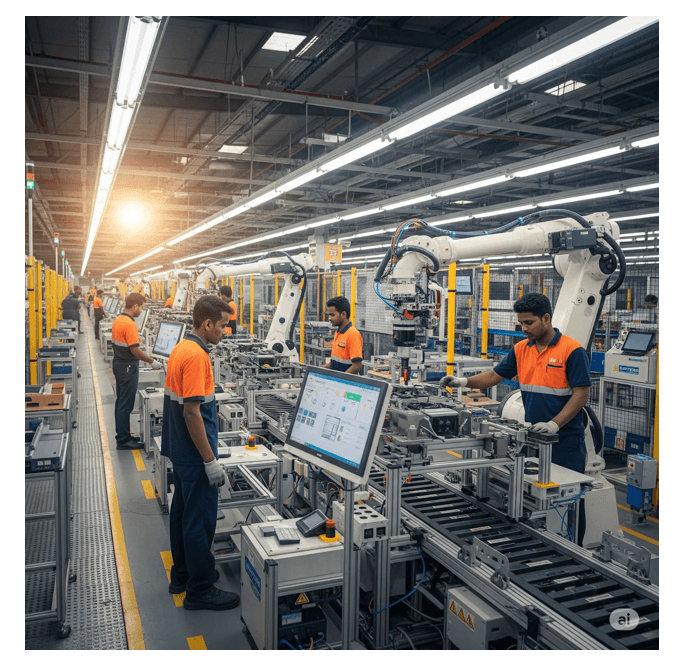
Modern assembly line with AI-driven inspection and robotic automation
Manufacturing quality inspection systems require high-resolution imaging, fast AI inference, and tight integration with factory control buses — all in a ruggedized, fanless form factor. The dual MIPI-CSI interfaces of the NX8MP-SMARC support simultaneous stereo vision or multi-angle capture for 3D reconstruction and surface defect detection. The 375 Mpixel/s HDR ISP handles high-resolution acquisition at production-line speeds.
For applications combining machine vision with real-time PLC-equivalent control, the 8 GB RAM variant of the NX8MP-SMARC provides sufficient memory headroom to run demanding neural network models alongside the Linux application stack and Cortex-M7 real-time tasks concurrently. The dual CAN bus connects directly to servo drives, actuators, and safety PLCs on existing factory floors.
3. Medical Devices and Healthcare Equipment
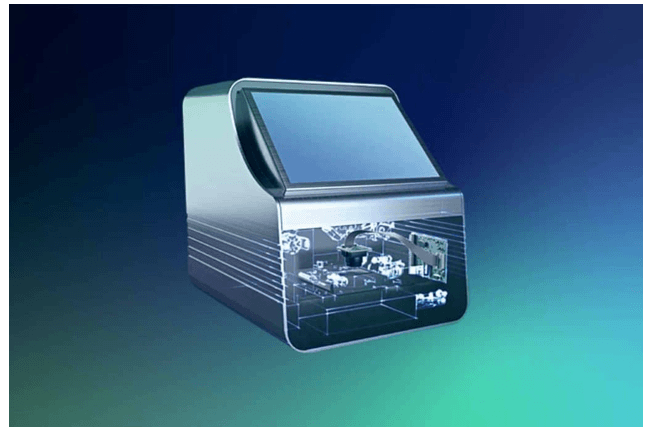
Embedded AI processing inside compact medical imaging hardware
Medical device manufacturers benefit from the NX8MP-SMARC's combination of processing power, hardware security, and long-term component availability. Portable diagnostic devices can use the NPU for on-device analysis of ultrasound, ECG, or dermatoscopy images — reducing dependence on cloud connectivity. Patient monitoring systems leverage the Cortex-M7 for deterministic sensor sampling and alarm generation, while the A53 cores run analysis algorithms and touch-screen interfaces.
The hardware security stack — TrustZone, Secure Boot, and optional TPM 2.0 — supports compliance-oriented development for protected health data. For this application area, the standard temperature 4 GB variant is often sufficient, as medical devices operate in controlled indoor environments, while the optional Wi-Fi / Bluetooth module enables wireless integration with hospital networks and wearable sensors.
4. Robotics and Autonomous Systems

Edge AI and real-time control in an industrial robotic environment
Modern collaborative robots (cobots) and autonomous mobile robots (AMRs) require tight integration of sensing, AI inference, motor control, and communication. The NX8MP-SMARC's NPU runs object detection and obstacle avoidance models locally with millisecond-level latency, while the Cortex-M7 handles real-time encoder feedback and motor control loops independently of the application OS. Dual CAN bus connects to joint controllers and servo drives.
For robotics deployed in uncontrolled outdoor or warehouse environments with significant temperature variation, the wide-temperature −40°C to +85°C variant is recommended. PCIe Gen3 additionally allows integration of LiDAR controllers, radar modules, or 5G communication cards via the carrier board.
5. Smart Retail, Digital Signage, and HMI Panels
The 4K HDMI output, dual LVDS, GPU-accelerated graphics, and Android BSP make the NX8MP-SMARC a capable platform for interactive kiosks, operator HMI panels, and intelligent digital signage. The NPU enables audience analytics — footfall counting, dwell time measurement, and attention detection — running continuously without cloud dependency. The Android environment simplifies content management development and integration with retail management backends.
For multi-screen setups such as a signage display plus a customer-facing touchscreen, the HDMI + Dual LVDS output capability of the 8 GB RAM variant provides sufficient GPU and system memory to drive both screens simultaneously with composited, hardware-accelerated content.
Why NX8MP-SMARC Stands Out on the Market
The i.MX 8M Plus SMARC module market includes offerings from congatec, AAEON, Axiomtek, Avnet, and others. The NX8MP-SMARC differentiates itself on several dimensions:
| Feature | NX8MP-SMARC |
|---|---|
| NPU | 2.3 TOPS (full i.MX 8M Plus NPU) |
| RAM options | 4 GB or 8 GB LPDDR4 — 8 GB is rare at this price tier |
| Storage | eMMC up to 128 GB MLC — above average for the class |
| Temperature | Down to −40°C (optional) — full industrial grade |
| Security | Hardware TPM 2.0 (optional), TrustZone, Secure Boot |
| BSP | Yocto + Android demo images included out of the box |
| Vendor track record | ICOP: 20+ years in industrial embedded computing |
ICOP Technology's deep experience across Q7, SMARC, COM Express, and ETX form factors translates into rigorous manufacturing quality and long-term product lifecycle commitments that align with industrial and medical procurement requirements.
Conclusion
The NX8MP-SMARC brings together edge AI acceleration, industrial-grade reliability, rich connectivity, and a developer-friendly software ecosystem in a 40-gram, 82 × 50 mm package. Its configurable RAM (4/8 GB), storage (up to 128 GB eMMC), temperature range (down to −40°C), and optional wireless and TPM hardware mean that a single module platform covers the majority of industrial, transportation, medical, and robotics use cases — with the carrier board remaining unchanged across variants.
The SMARC form factor's modularity, combined with NXP's 15-year longevity commitment for the i.MX 8M Plus, makes the NX8MP-SMARC a forward-looking platform investment: one that protects carrier board and enclosure design investments while leaving the compute layer upgradeable.