Innodisk has announced a new SSD drive in the E3.L 5QS-P series, designed specifically for data centers.

The E3.L 5QS-P model is primarily designed for continuous operation under heavy load conditions and can withstand a wide range of operating temperatures from 0°C to 70°C. Special active thermal management technology automatically adjusts performance, preventing overheating and ensuring uninterrupted operation.
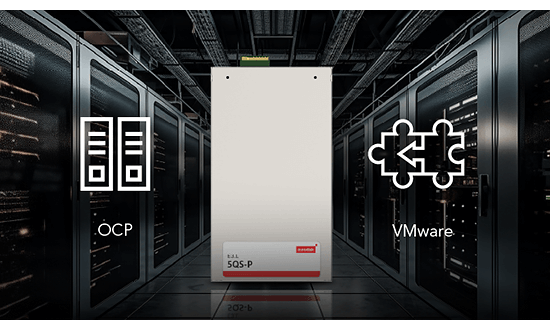
Innodisk developed 5QS-P to meet the requirements of leading digital technology standards such as OCP Data Center NVMe SSD Specification v2.0 and VMware.
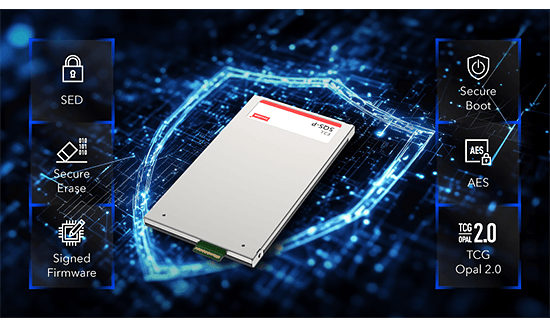
To protect sensitive data, the E3.L 5QS-P is equipped with a number of advanced security features, including a self-encrypting drive (SED) supporting AES 256-bit encryption, TCG Opal 2.0 standards, secure erase and boot support, and signed firmware.
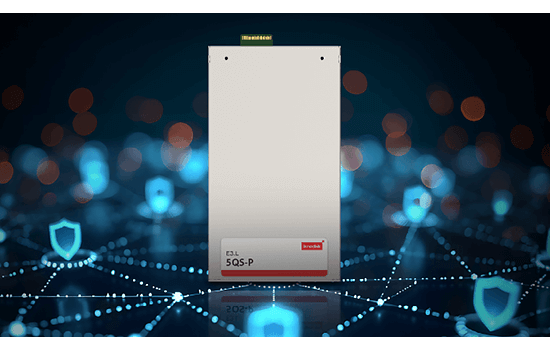
With built-in iCell technology, Innodisk ensures the protection of critical information and the absence of data loss during unexpected power failures by quickly storing cache data to flash memory on the SSD drive.

Additionally, the 5QS-P model offers comprehensive management tools, including event logging and device status monitoring, remote firmware updates, and out-of-band management capabilities.
Key technical specifications:
|
Model |
E3.L 5QS-P |
|
Flash type |
QLC |
|
Interface |
PCIe Gen 5 x4 |
|
Form factor |
E3.L |
|
Volume |
128 TB max |
|
Sequential Read/Write (Gb/s) |
12/5 |
|
Operational temperature |
0°C to 70°C |
|
Energy consumption |
< 40 W |
|
Channels |
16 |
|
External DRAM buffering |
Yes |
|
Dimensions |
76.0 × 142.2 × 7.5 mm |
|
Vibration resistance |
20G @ 7–2000 Hz |
|
Shock resistance |
1500G @ 0.5 ms |
|
MTBF |
2 million hours |
Overall, the E3.L format is gaining increasing popularity among SSD manufacturers, especially in applications requiring powerful and compact devices to store colossal amounts of data, such as large data centers and supercomputers. The rapid adoption of E3.L drives is accelerating the replacement of aging U.2-type solutions, as growing volumes of processed data will soon make it impossible for computing systems to operate efficiently without high-capacity and high-performance E3.L SSDs.