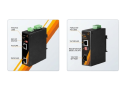
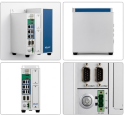
One of the most common questions from engineers and product managers evaluating edge AI deployments is: "What actually sets NVIDIA Jetson apart from a traditional Industrial PC — and when should we choose one over the other?" The answer is more nuanced than a simple performance comparison. It touches on hardware architecture, software ecosystems, power budgets, physical constraints, data privacy, and long-term scalability. This knowledge base breaks down the key differences in practical terms, based on in-depth technical insight from Aetina's own edge AI engineering team.

What Is NVIDIA Jetson?
NVIDIA Jetson is a family of embedded computing modules designed from the ground up for AI applications. Unlike a conventional computer that uses a general-purpose CPU with an optionally attached GPU, each Jetson module integrates a CPU, a GPU, and a dedicated AI accelerator (deep learning inference engine) into a single compact package — typically smaller than a credit card.
The term "embedded" in this context is interchangeable with "edge": Jetson modules are designed to perform computation locally, at or near the data source, rather than transmitting raw data to a central server or cloud for processing. This architecture makes Jetson uniquely suitable for real-time AI inference at the edge — where low latency, offline operation, and physical compactness are critical requirements.
Aetina's DeviceEdge product line is built on NVIDIA Jetson modules. Aetina adds a custom Board Support Package (BSP) with additional I/O drivers and hardware not present in NVIDIA's own development kits, making the platforms production-ready for industrial and commercial deployments.
Five Key Differences: Jetson vs. Traditional IPC
1. Purpose-Built for AI vs. General-Purpose Computing
Traditional Industrial PCs are general-purpose computing platforms — they were designed to run industrial control software, SCADA systems, HMIs, and data acquisition applications. Running AI workloads on a traditional IPC is possible, but requires adding discrete GPU cards, which increases cost, power draw, and physical size. NVIDIA Jetson, by contrast, was specifically designed for AI and machine learning workloads from the silicon level upward. Every architectural decision — from the memory subsystem to the GPU instruction set to the deep learning accelerator — was made with AI inference and training in mind. The result is a platform that can run the same AI models more efficiently, at lower power, and in a smaller form factor than any IPC-based equivalent.
2. Integrated AI Computing Power (TOPS)
The AI performance of NVIDIA Jetson modules is measured in TOPS (Tera Operations Per Second) — the number of trillion mathematical operations the dedicated AI hardware can execute per second. The current NVIDIA Jetson Orin family covers a wide range of performance tiers:
A traditional IPC achieves none of this AI throughput without discrete GPU cards. To match the 275 TOPS of a Jetson AGX Orin, a traditional IPC would require a high-end GPU card — dramatically increasing the system's size, cost, and power consumption.
3. Form Factor
Physical size is a fundamental constraint in many edge AI applications. A Jetson Orin Nano module measures just 45 × 70 mm — roughly the size of a business card. The smallest available IPC motherboard measures approximately 146 × 120 mm, which is already more than four times the area. In practice, this size difference determines whether an AI system can be integrated into a compact traffic cabinet, a handheld agricultural scanner, an underwater camera housing, or a robot chassis — or whether it requires a separate equipment rack.

Visual size comparison: smallest IPC motherboard (146 × 120 mm) vs. NVIDIA Jetson Orin Nano module (70 × 45 mm)
4. Power Efficiency and Total Cost
Power consumption is both an operational cost and a physical constraint — particularly in edge deployments where power is supplied by solar panels, vehicle batteries, or limited-capacity infrastructure.
The Jetson AGX Orin 64GB delivers 275 TOPS while consuming only 130W. A traditional IPC configured with high-end GPU cards to achieve equivalent AI throughput consumes over 500W — approximately four times more power. Over the lifetime of a deployment running 24/7, this difference translates directly into significant operating cost savings. On the hardware cost side, Jetson modules integrate CPU, GPU, and AI accelerator into a single package — eliminating the need for separate, costly discrete GPU cards that a traditional IPC would require.
5. Edge Processing and Data Privacy
Traditional IPCs — particularly in AI workloads — often rely on cloud connectivity to offload processing to remote servers. This creates two problems: latency (the round-trip to the cloud adds delay that makes real-time AI responses impossible) and privacy (raw sensor data, video streams, and personal data are transmitted over a network to external infrastructure). NVIDIA Jetson processes everything locally, at the edge. Raw video, biometric data, or other sensitive inputs are analyzed and reduced to metadata or events on-device — the raw data never leaves the local system. This makes Jetson the architecture of choice for privacy-sensitive applications such as medical diagnostics, public surveillance, and industrial inspection.
The NVIDIA Jetson Software Ecosystem
Beyond hardware, what truly differentiates NVIDIA Jetson from general-purpose IPC platforms is the depth and quality of its AI software ecosystem:
- JetPack SDK and Jetson Platform Services — NVIDIA's JetPack SDK provides a complete, production-ready software foundation including the operating system, AI libraries, and development tools. Jetson Platform Services (part of JetPack 6.0) evolved from the NVIDIA Metropolis Microservices framework and provides ready-made, pre-integrated modules for common AI tasks such as object detection, classification, and tracking — enabling developers to start from working reference implementations rather than building from scratch.
- TensorRT and DeepStream — TensorRT is NVIDIA's high-performance deep learning inference optimizer, accelerating AI model execution on Jetson GPU hardware. DeepStream is a streaming analytics toolkit enabling efficient, multi-pipeline video AI processing. Both are fully supported and optimized for all Jetson modules.
- CUDA and Developer Community — CUDA, NVIDIA's parallel computing platform, is supported across the entire Jetson lineup. A large active developer community provides resources, troubleshooting support, and open-source contributions for every major AI framework (PyTorch, TensorFlow, ONNX, and others).
- Ecosystem Partners — NVIDIA maintains an extensive network of hardware partners (including Aetina), software ISVs, camera manufacturers, and AI solution providers — creating a comprehensive ecosystem for building production AI systems without starting from scratch.
- Aetina's Custom BSP — Aetina's DeviceEdge products add a custom Board Support Package on top of the standard JetPack software. This BSP includes drivers for the additional I/O interfaces, custom hardware, and peripherals present on Aetina's carrier boards that are not part of NVIDIA's official development kit — accelerating integration and reducing bring-up time for Aetina customers.
How to Choose the Right Jetson Module: The TOPS Decision Framework
Selecting the correct Jetson module for an application starts with defining the required AI computing power — measured in TOPS — based on the complexity and number of simultaneous AI workloads to be executed. The decision framework recommended by Aetina's technical team is:
- Start with a Proof of Concept (PoC) — run candidate AI models on available hardware to measure real-world inference latency and determine which performance tier meets the application's real-time requirements.
- Define the workload — the number of simultaneous camera streams, the complexity of the AI model (number of parameters, input resolution), and the required output latency together determine the minimum TOPS needed.
- Consider headroom — select a module with enough overhead for model updates, additional analytics pipelines, and future capability expansion without requiring a hardware replacement.
- Partner with an ISV if starting from scratch — Aetina and NVIDIA's network of ISV partners can significantly accelerate the development timeline. Moving from PoC to full deployment typically takes 6–12 months without partner support; with Jetson Platform Services and an experienced ISV, this timeline can be reduced to a few months.
Looking Ahead: 5G, Scalability, and Real-Time AI
Three technology trends are converging to further strengthen Jetson's position in industrial and commercial edge AI over the coming years:
- 5G Connectivity — integrating 5G modules (available via M.2 and Mini-PCIe slots on Aetina DeviceEdge platforms) will dramatically improve data transfer rates between distributed edge nodes, enabling more efficient remote configuration, firmware updates, and event-driven data forwarding to central analytics systems.
- Real-Time Processing as a Non-Negotiable — in smart city, autonomous systems, and medical applications, cloud latency is not acceptable. As AI use cases mature, on-premise, real-time processing will become a baseline requirement — not a differentiator — and Jetson's architecture is built precisely for this operating model.
- Multi-Unit Scalability — deploying multiple AGX Orin units in parallel enables either higher-throughput AI pipelines (distributing workloads across units) or fault-tolerant architectures (one unit serving as a hot standby). This pattern is increasingly relevant for customers in industrial and critical infrastructure environments where system downtime is unacceptable.
Full Comparison Summary
| Feature | NVIDIA Jetson (Orin Series) | Traditional IPC |
|---|---|---|
| AI Specialization | Integrated CPU + GPU + AI accelerator, purpose-built for AI workloads | General-purpose; requires discrete GPU cards for AI performance |
| AI Computing Power | 20 TOPS (Orin Nano) to 275 TOPS (AGX Orin) — built-in | Requires high-end, expensive, power-consuming discrete GPUs to match |
| Form Factor | Highly compact — Orin Nano: 45 × 70 mm | Larger — smallest IPC motherboard: 146 × 120 mm |
| Power Efficiency | 130W for 275 TOPS (AGX Orin 64GB) | 500W+ to achieve equivalent AI throughput |
| Hardware Cost | Lower — CPU, GPU, AI accelerator integrated in one module | Higher — separate discrete GPU cards required for AI performance |
| Software Ecosystem | JetPack SDK, TensorRT, DeepStream, CUDA, Jetson Platform Services, large developer community | General-purpose OS and frameworks; no specialized AI acceleration tools |
| Edge Computing & Privacy | Full on-device processing; no cloud dependency; enhanced data privacy | Often requires cloud connectivity for real-time AI; privacy risk with data transfer |
| Scalability | Wide performance range; lifecycle commitment to January 2030 | Scaling requires GPU upgrades; hardware changes affect system design |

The NVIDIA Jetson Orin family: Orin Nano (20 TOPS), Orin NX (70 TOPS), AGX Orin (275 TOPS)
When to Choose Jetson — and When a Traditional IPC May Still Apply
NVIDIA Jetson is the right choice when the application requires real-time AI inference at the edge, physical compactness, low power consumption, data privacy, or offline operation. This covers the vast majority of modern computer vision, robotics, smart city, agricultural AI, medical imaging, and industrial inspection use cases.
A traditional IPC remains appropriate for applications that are not AI-centric — such as legacy SCADA and PLC control, deterministic real-time motion control using proprietary fieldbus cards, or HMI display systems that have no image recognition or machine learning component. In these cases, the general-purpose computing and rich legacy I/O compatibility of a traditional IPC may be the more cost-effective solution.
For applications that need both — edge AI inference and industrial fieldbus control — NEXCOM's hybrid platforms (such as the NIFE series with Mini-PCIe fieldbus expansion) or dedicated AI edge computing platforms with GPIO and serial I/O (such as Aetina's DeviceEdge and MegaEdge products) can address both requirements simultaneously.